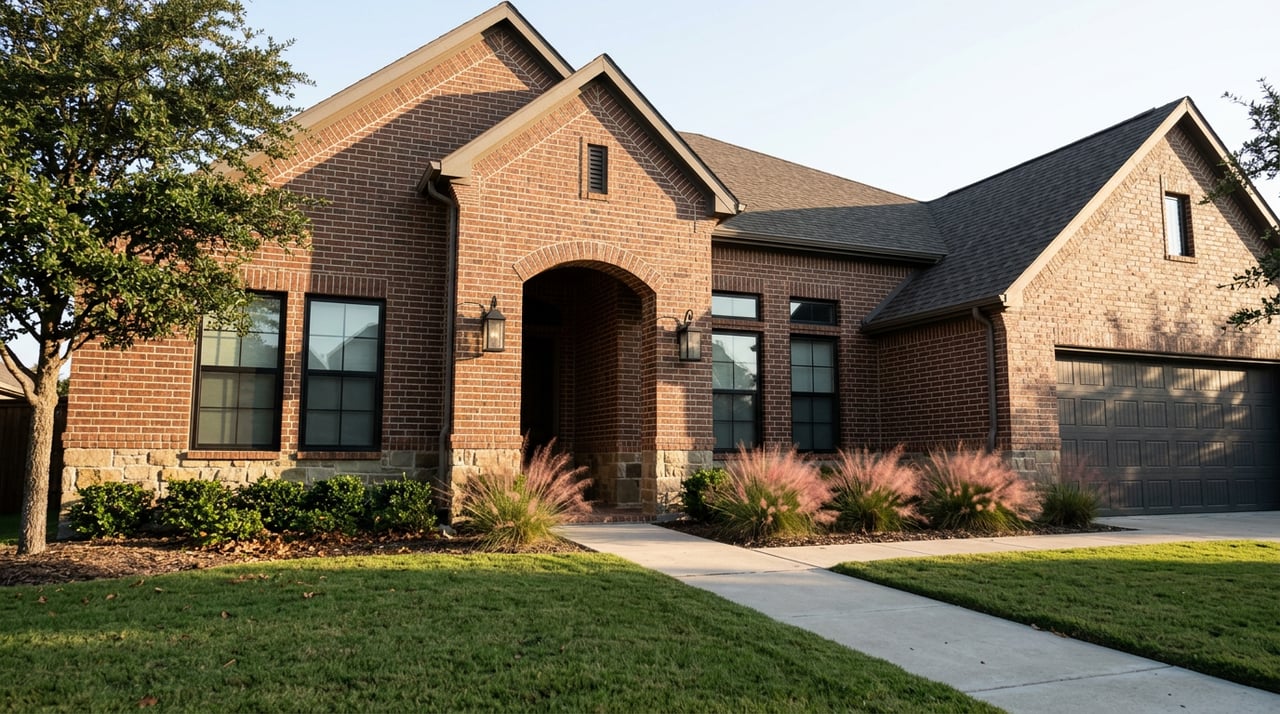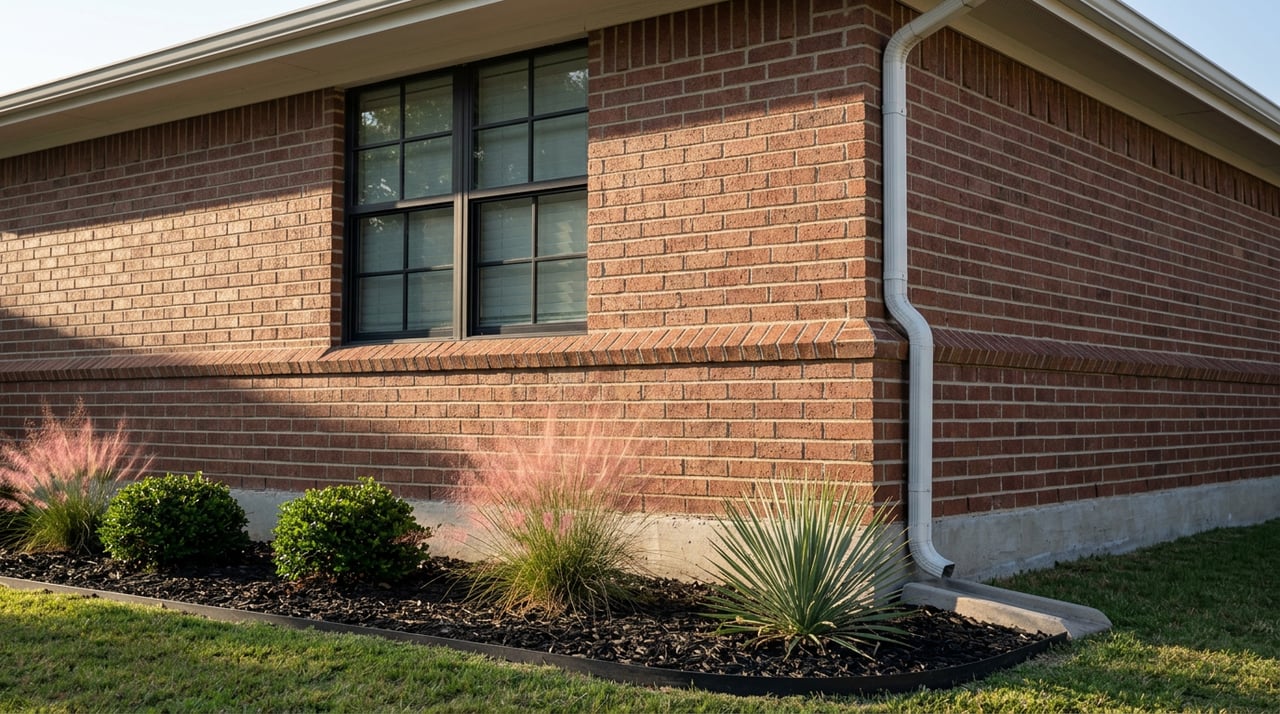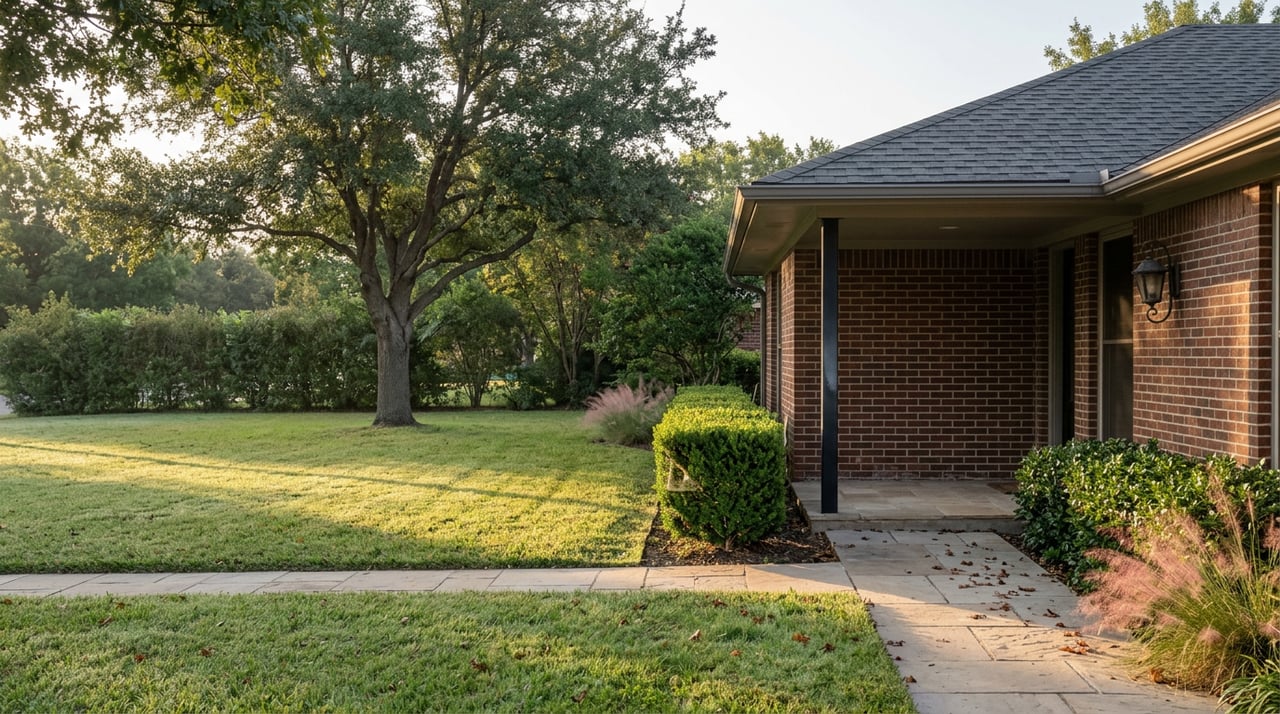
A homeowner in the Kennedale Hills area noticed a damp, sunken patch of yard that had nothing to do with the sprinklers. It didn't dry out over a few weeks of watching it, so a local plumber came out with a camera. The line ran nearly 80 feet from the house to the municipal connection, because the lot was a half acre, and about 55 feet out the camera found a cracked joint where a tree root had worked its way in over years, letting soil wash into the pipe.
That house was on city sewer. It had been the whole time. The seller's disclosure would have said so, correctly, and nobody would have flagged a problem. The failure happened in the 55 feet of pipe that sits between the house and the property line, a stretch of line the homeowner owns and maintains, not the city.
That's the part of Kennedale real estate that doesn't show up on a standard disclosure form, and it's worth understanding before you write an offer here.
The town is mostly sewered, which is exactly why the exceptions get missed
Kennedale's sewer system is not new, but it's not universal either. According to the city's own history page, the first city water lines went in around 1952, with sewer lines following in the early 1960s. Everything built before that, and pockets of property on the edges of town that the network never quite reached, can still be running on a private septic system decades later.
A regional septic company that services the area puts it plainly: septic in Kennedale is the exception, not the rule, and the properties that still have it tend to be older homes that were never connected when the sewer network expanded around them. Because it's the exception, it's also the thing buyers stop checking for. If nine out of ten houses on a street are on sewer, it's an easy assumption to carry into the tenth.
The company's own guidance for figuring out which one you've got is simple enough to do yourself before you ever call anyone: check whether your city utility bill includes a sewer line item, and if it doesn't, you're likely on septic. Physically, look for one or two access lids in the yard, a small control panel mounted on an exterior wall, or sprinkler heads that run water without your irrigation controller doing anything, all signs of an aerobic septic system rather than a straightforward gravity line.
The other failure doesn't involve septic at all
Here's where the disclosure form runs out of usefulness. Texas requires sellers to complete the Seller's Disclosure Notice and, if the home has an on-site sewer facility, the separate TXR-1407 form detailing the system's type, age, and maintenance history. That's real protection, and it exists specifically because septic systems are complicated enough that a seller's plain-language description isn't enough on its own.
But TXR-1407 only triggers when a home is on septic. A home connected to city sewer answers "yes, sewer" and moves on. Nothing on the form asks how long the private line run is, how old it is, or whether it passes under mature trees on its way to the street, because none of that is a defect the seller necessarily knows about or is required to have investigated. The Kennedale Hills example above is exactly this case: sewer-connected, disclosure accurate, and still a five-figure repair waiting to happen underground.
A local plumbing company that works throughout Kennedale describes this as a pattern tied to the town's older housing stock and larger lots, where sewer line runs are longer than what you'd find in a typical newer subdivision, and root intrusion or joint failure becomes a recurring service call rather than a one-off. Longer runs simply have more length in which something can go wrong, and more of that length sits underground where a standard walk-through inspection has no way to see it.
What to actually check before you're under contract
None of this requires hiring a specialist before you've even made an offer. It requires asking a few specific questions instead of one general one.
- Ask directly whether the property is on septic or city sewer, and if septic, request the TXR-1407 form along with pumping and maintenance records rather than taking a verbal answer
- If the home is on city sewer, ask the age of the home and the approximate distance from the house to the street connection, since older homes on larger lots are the ones with the longest private runs
- For any home with a lot over a quarter acre or built before the mid-1970s, consider a sewer camera inspection as a add-on to your standard inspection, not a replacement for it
- Check the seller's utility billing history for anything unusual, since a sewer line that's already leaking sometimes shows up as an unexplained jump in water usage before it shows up as a wet spot in the yard
The costs involved are modest relative to what they protect against. A septic system inspection in the Kennedale area typically runs $300 to $500, and pumping a tank that hasn't been serviced in two to three years runs another $250 to $400. A sewer camera inspection is a standard add-on many local inspectors already offer. Compare that to the cost of excavating and replacing a failed section of line on a half-acre lot, which is a job measured in thousands, not hundreds.
| Item | Typical cost | When it applies |
|---|---|---|
| Septic system inspection | $300–$500 | Any property disclosed as septic |
| Septic tank pumping | $250–$400 | Septic systems not serviced in 2–3 years |
| Sewer camera inspection | Add-on to standard inspection | Older homes, larger lots, long line runs |
One more wrinkle worth knowing before you call anyone
If you do need to verify water or sewer status on a Kennedale property, know who you're actually calling. The City of Kennedale's own utility page confirms that the city's water and wastewater system is operated and maintained by the City of Arlington, not by Kennedale directly, and that billing has been transitioning to Arlington Water Utilities. That's not a defect or a red flag, it's just a governance detail that changes who answers the phone when you're trying to confirm a connection or ask about a specific line. A buyer who calls Kennedale City Hall expecting utility field data and a buyer who calls Arlington Water Utilities are going to get two different levels of detail, and knowing which one to try first saves a step during option period.
What this means at the negotiating table
If you're buying in Kennedale, the useful move is to stop treating "connected to sewer" as the end of the conversation and start treating it as the beginning of a slightly more specific one. Ask about age and lot size the same way you'd ask about roof age or foundation history, because on a long-run property, the sewer line is a system with its own lifespan, and nobody discloses a lifespan they were never asked about.
If you're selling an older home on a larger Kennedale lot, getting ahead of this with your own camera inspection before listing does two things. It gives you accurate information to put in front of a buyer's agent instead of a generic "sewer, no known issues" answer, and it removes a point of leverage a buyer's inspector might otherwise find during option period, when a problem discovered late tends to cost more in negotiation than the inspection itself would have cost up front.
Frequently asked questions
Is most of Kennedale on septic or city sewer? The large majority of the city is on municipal sewer. Septic systems remain mostly in older homes and properties near the edges of the city that predate the sewer network's expansion or were never connected to it.
Does a home on city sewer still need any special inspection? There's no legal requirement beyond a standard home inspection, but older homes on larger lots benefit from an optional sewer camera inspection, since standard inspections don't typically trace the full underground line.
What does the TXR-1407 form cover, and when is it required? Texas requires sellers to attach the TXR-1407 On-Site Sewer Facility form to the standard disclosure notice whenever a property has a septic system. It covers system type, age, maintenance contracts, and pumping history, but it doesn't apply to homes on city sewer.
Who do I contact to verify water or sewer connection for a Kennedale property? Kennedale's water and wastewater system is operated by the City of Arlington. Arlington Water Utilities handles billing, transfers, and usage questions, while Kennedale City Hall handles emergency reporting and general city services.
Whether you're weighing an older home on a big Kennedale lot or trying to confirm what's actually running under the yard of a house you're already excited about, this is exactly the kind of local detail worth working through with someone who knows the town, not just the listing. Niles Realty Group can walk you through what to ask before you write an offer and connect you with the right inspection for the property you're actually buying. Request a free home valuation to start the conversation.