Pull up any Pantego listing and you'll see the number everyone quotes: a median sale price sitting at $400,000 as of May 2026, with the average closing closer to $421,000. What you won't see on that same sheet is the number the Town Council just voted on, or the number sitting behind half the "recent updates" bullet points in the listing description. Both of those numbers change what a Pantego address actually costs, and neither shows up in a median.
The tax rate moved more than the market did
Pantego is a town of 2,568 people, incorporated in 1952, entirely surrounded by the city of Arlington on three sides and by Dalworthington Gardens to the south. It runs its own municipal budget independent of its much larger neighbor. That budget just changed in a way worth understanding before you make an offer inside its borders.
For fiscal year 2024-25, Pantego's property tax rate sat at $0.570000 per $100 of valuation. For fiscal year 2025-26, the town's adopted budget raised that rate to $0.630000, a jump of roughly 10.5 percent in a single cycle.
| FY 2024-25 | FY 2025-26 | |
|---|---|---|
| Property tax rate (per $100 valuation) | $0.570000 | $0.630000 |
| Additional revenue raised | — | $326,897 (+12.66%) |
| Revenue from new property added to the roll | — | $4,839 |
That last row matters as much as the first two. Only $4,839 of the new revenue came from fresh construction being added to the tax roll. The rest of the increase is coming from existing homeowners paying more on the same houses they already own. In a town with almost no vacant land left to develop, that's the only lever left to pull when costs rise.
Pantego residents are feeling this from more than one direction. On May 2, 2026, the town held a general election that included a special ballot proposition asking voters to reauthorize a local sales and use tax of one-quarter of one percent specifically earmarked for maintenance and repair of municipal streets. Voters have to keep saying yes to that quarter-cent just to keep the roads funded. That's not a sign of a town flush with cash.
Why a town this small raises rates this fast
A city of 400,000 can absorb a tax hike across a huge base of commercial property, new subdivisions, and a diversified budget. Pantego cannot. The town covers just over one square mile, and its own economic development initiatives are modest by design: façade and sign grants for existing local businesses, improvements to Bicentennial Park, and work along the Park Row and 303 corridors. These are the kinds of projects a small town funds out of its own residents' pockets, because there isn't a large commercial tax base to lean on instead.
This is the trade a Pantego buyer is actually making. You get a big lot, mature trees, and a town small enough that the mayor's name is on the same page as the public works director. You also get a budget with almost nowhere to hide a shortfall except the tax rate, which means the rate is more likely to move again than a comparable line item in a much larger city next door. A median sale price tells you what the house costs today. It says nothing about what the annual tax bill will look like in two years.
The other cost is already built into the walls
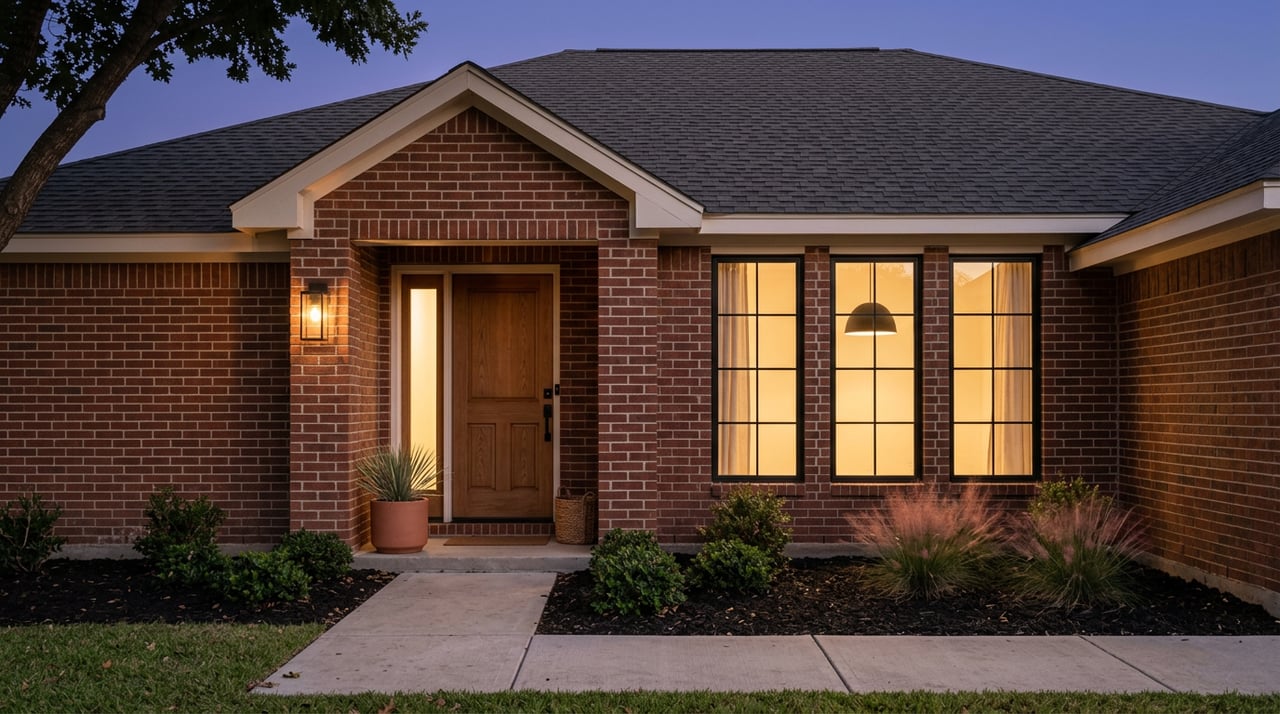
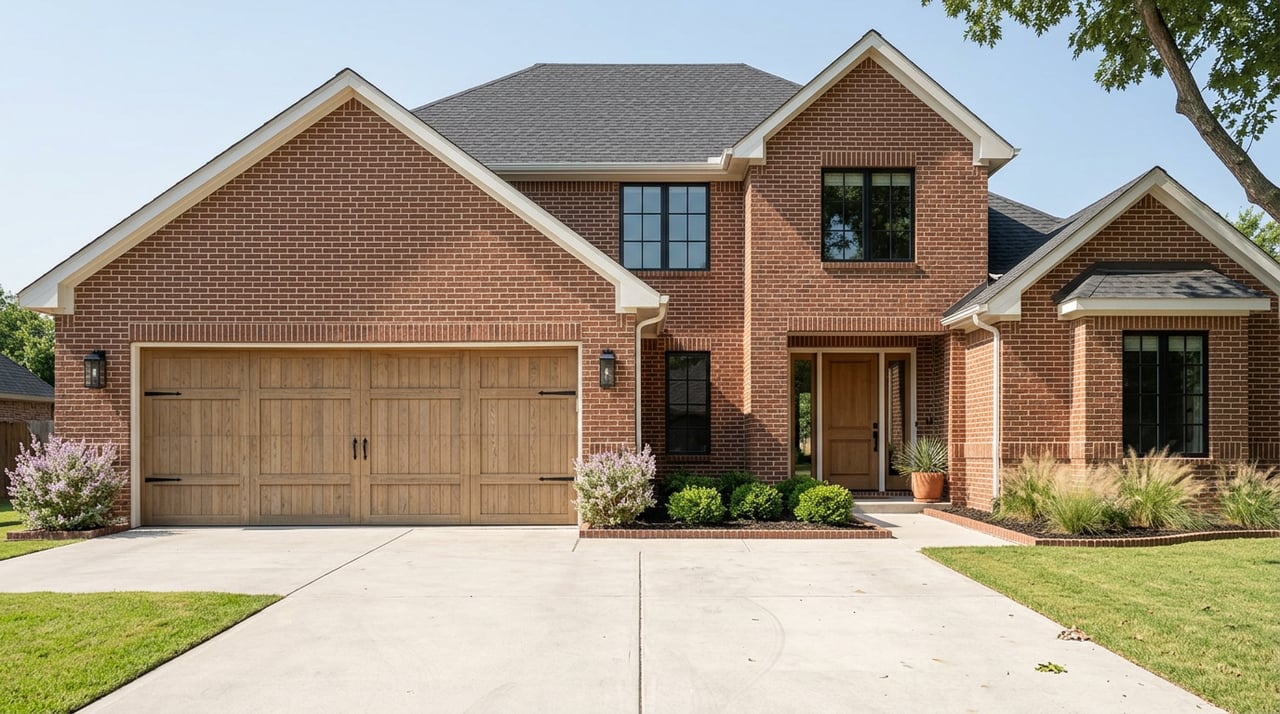
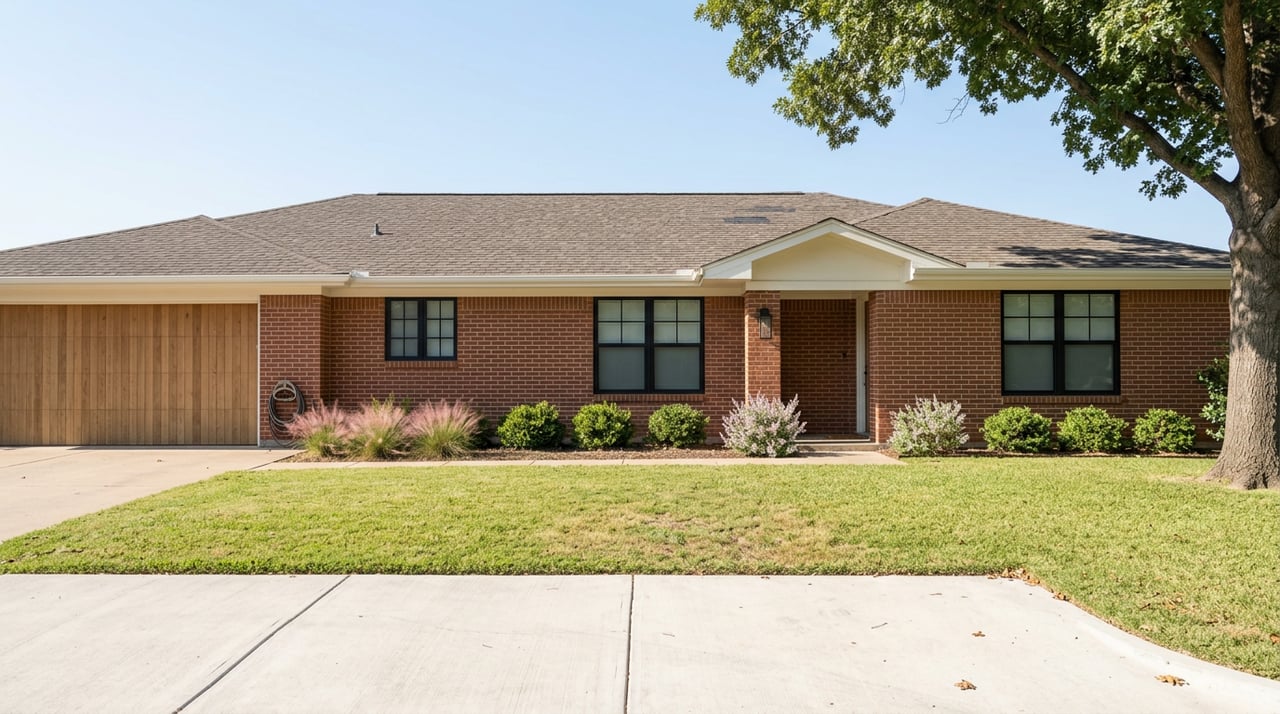
Pantego's housing stock is older than its price tag suggests. Most of the inventory is brick ranch-style construction from the late 1960s and 1970s, with a scattering of multilevel homes and condos in the Forest Edge subdivision. That era of construction is now old enough that its original systems are at or past the end of their expected life.
You can see this show up directly in how sellers are marketing their homes right now. Instead of leading with square footage or a bonus room, a striking number of active Pantego listings lead with the capital work that's already been done:
- A new roof installed within the past several years
- HVAC systems replaced rather than repaired
- Foundation repairs completed and documented
- Original cast iron plumbing swapped out for PVC
- Popcorn ceiling removal and other cosmetic system-level updates
None of that is decorative. It's the seller pre-answering the question every inspector is going to raise on a home built before 1980: what's original, and what's been replaced. In Pantego specifically, this has become common enough that the absence of one of these updates on a listing is itself information. If a 1968 ranch doesn't mention a roof date or a foundation history, assume you'll need to budget for one, because the trade contractors serving this town do more foundation, concrete, and system-replacement work here than almost any other category of home service.
The upshot for a buyer comparing Pantego to a newer-build suburb further out is straightforward. The purchase price gap between a 1970 ranch and a 2020 build looks large on paper. Once you price in a foundation repair, a full HVAC replacement, or a plumbing conversion that a 50-year-old house may still need, that gap narrows. The math that matters isn't the sale price. It's the sale price plus whatever system work hasn't been done yet.
One ZIP code, two different markets
Here's a discrepancy worth sitting with. One national listing tracker puts Pantego's average time on market at 37 days as of May 2026, well under the national average of 57 days. Another, covering roughly the same window, shows homes sitting closer to 73 days. That's too wide a gap to be rounding error, and it lines up with something else visible in the same data: a small cluster of lower-priced listings, five homes at a median asking price of $380,000, sitting in inventory alongside recently updated homes that are moving fast.
The likely explanation is the same renovation split described above. Homes with the new roof and the replaced HVAC already documented are easy for a buyer to price and move quickly. Homes still running on original 1970s systems require a buyer to price in an unknown repair cost before they'll commit, and that uncertainty is what slows a sale down. Depending on which slice of inventory a given snapshot happens to weight more heavily, the same town can look like a 37-day market or a 73-day market in the same month.
The trailing 12-month median sale price of $365,000, down 2 percent from the previous 12-month period as of May 2026, is consistent with softness concentrated in the original-condition tier rather than a broad decline across the whole town. A buyer using the median as a single number to size up Pantego is averaging together two markets that behave differently and should be priced differently.
What this means at the offer table
If you're comparing Pantego to another DFW suburb on price alone, you're comparing an incomplete number to a complete one. A fair comparison has to include the tax rate trajectory a town of 2,568 people is now on, and the realistic cost of bringing a pre-1980 home's systems current if the listing doesn't show that work has already been done. Ask for the seller's disclosure on age of roof, HVAC, foundation, and plumbing before you write an offer, not after inspection. In a town this size, that document tells you more about your real cost of ownership than the median ever will.
Frequently asked questions
Is Pantego its own city government, separate from Arlington? Yes. Pantego is an independently incorporated town, established in 1952, with its own mayor, town council, and municipal budget. It is surrounded by Arlington but governs itself, which is why its property tax rate and municipal decisions move independently of Arlington's.
Why do so many Pantego listings mention foundation repair or plumbing replacement? Most of the town's housing stock dates to the late 1960s and 1970s. At that age, original roofs, HVAC systems, and plumbing are commonly at or past their expected service life, so sellers who have already done that work tend to highlight it as a selling point.
Is the Pantego market currently rising or falling? It depends on which tier you're looking at. The overall May 2026 average price and days-on-market figures point to a healthy, fast-moving market for updated homes. The trailing 12-month median, down 2 percent, suggests softer pricing concentrated in the original-condition segment, where homes are also taking roughly twice as long to sell.
If you're weighing a Pantego address against other options in the DFW suburbs, the sale price is only half the conversation. Niles Realty Group can walk you through the tax history, the system-repair status, and the real comps for both tiers of this market before you write an offer. Request a free home valuation and we'll show you what a specific Pantego property actually costs to own, not just to buy.